
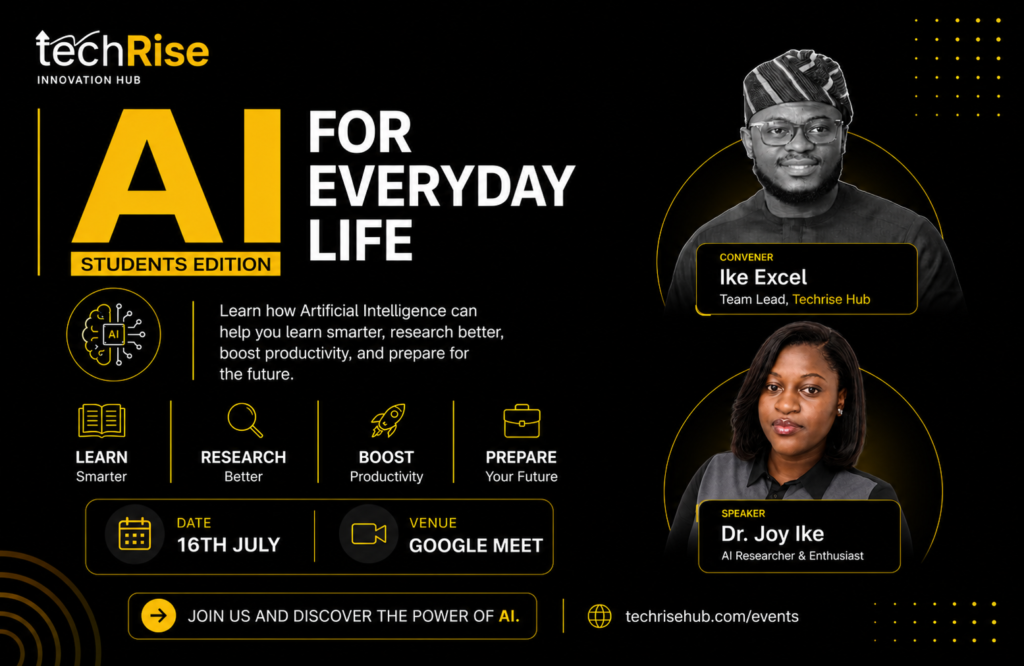
Stop Studying Harder: 5 Surprising Ways AI is Redefining the Modern Student Experience
The 2:00 AM Wall: Why Our Current Study Habits are Failing Us
Every student knows the feeling: the “pre-exam” wall. Lectures have piled up, deadlines are closing in like a vice, and the sheer volume of slides feels impossible to navigate. This universal stress isn’t just a rite of passage; it’s a signal that our traditional study methods are reaching their breaking point.
As a learning strategist, I see a massive gap between the excitement surrounding Artificial Intelligence and the actual understanding of how to use it. The goal isn’t to find a shortcut to an “A”—it’s to bridge the gap between your existing skills and your ultimate potential. To thrive in this new era, you must stop looking at AI as a way to “outsource” your homework and start viewing it as a sophisticated Study Partner. This is about human-centered innovation: using tech to amplify your reasoning, not replace it.
1. It’s Not Artificial Intelligence—It’s “Augmented” Intelligence
We need to reframe the narrative. Tech ecosystem leader Mr. Ike Excel suggests we pivot from the fear of “machine replacement” toward the reality of Augmented Intelligence. This is the synergistic relationship where machine efficiency meets human potential.
While the machine excels at processing data and organizing knowledge, the human provides the vital spark of reasoning. When you embrace this shift, you move from confusion to clarity. AI acts as a “Smart Study Architect,” an endlessly patient partner that handles the heavy lifting of information retrieval so you can focus on high-level application.
“This is the coming together of the human intelligence and the machine intelligence together we are better.”
2. The “Personalized Tutor” in Your Pocket: Tool-Task Alignment
One-size-fits-all education is a relic of the past. Modern learners leverage AI to create a self-paced, multimodal experience that adapts to visual, auditory, or Kinesthetic styles. However, the secret to scaling your productivity lies in choosing the right tool for the specific task:
- For Organizing Personal Knowledge: Use NotebookLM. It allows you to query your own lecture notes and can even transform 100-page transcripts into audio podcasts for listening on the go.
- For Research with Integrity: Use Perplexity AI. Unlike standard LLMs, it functions as a search tool that provides specific citations, which is essential for final-year projects and academic papers.
- For Polishing and Professionalism: Use Claude AI. It is significantly better at generating well-formatted documents and provides a clear “thinking process” that helps you follow its logic.
- For Design and Synthesis: Use Canva AI or Gamma to transform raw ideas into professional presentations effortlessly.
3. Mastering the “Human-in-the-Loop” Framework
Dr. Joy Chidinma Ike, a researcher and AI educator, emphasizes that the human must always remain “in the loop.” To maintain academic integrity and avoid “hallucinations” (when AI confidently states a falsehood), you must apply the “THINK” Framework to every output:
- T – Is it True? Always cross-verify facts and check the sources.
- H – Is it Helpful? Does it actually solve the problem or just add noise?
- I – Is it Genuine Insight? Does the content offer depth, or is it merely surface-level filler?
- N – Is it Necessary? Keep it concise; avoid the “information dump.”
- K – Does it reflect your Knowledge? The final work must represent your unique understanding.
Expert Tip: One of the biggest “AI giveaways” is the overuse of M-dashes (—) and generic, repetitive sentence structures. To keep your voice human, strip out these automated formatting tics and inject your personal tone.
4. Prompting is a Superpower (Engineering 101)
To move from basic results to professional-grade output, you must master Prompt Engineering. It’s about giving the AI specific, high-quality instructions that mirror your intent.
- Role Play: Assign the AI a persona (e.g., “You are a senior researcher”).
- Constraints: Set boundaries like word counts, page lengths, or specific paragraphs.
- Style Mirroring: Provide a sample of your previous writing and ask the AI to replicate your voice.
The Anatomy of a Pro Prompt
| Prompt Type | Example | Result & Why It Works |
| Bland/Generic | “Write a paper on poultry farming in Nigeria.” | Bland/Impersonal: Produces a generic overview that likely looks like every other AI-generated assignment. |
| Pro-Specific | “You are a 4th-year agriculture student in SE Nigeria. Your professor has 15 years of experience. Write a 3-page expose on the benefits of poultry farming, include specific case studies, and use a comparison table with pig farming.” | Unique/Structured: Narrows the scope to a regional context and academic level. It forces the AI to use specific formats (tables) that reflect active human judgment. |
5. The Skill of the Future Isn’t Coding—It’s Judgment
The webinar concludes with a powerful realization: as information becomes a commodity, its value drops. What becomes priceless is Wisdom. AI generates information, but human reasoning creates wisdom.
In the 21st-century job market, employers aren’t looking for people who can simply “use tools.” They want individuals with:
- Emotional Intelligence: The human connection that AI can never replicate.
- Critical Thinking: The ability to challenge what the AI says and spot biases.
- The Ability to Reason Independently: Using AI to “refine and challenge” what you already believe, rather than letting it decide for you.
“AI is generating information but by the time you use your human reasoning you create wisdom out of what the AI has given you.”
Conclusion: Your AI Challenge
The future belongs to the students who combine their innate creativity with AI literacy. Small habits lead to big results. You don’t need to overhaul your entire workflow today—just take one step.
The Mini AI Challenge:
- Summarize: Use an AI tool to distill one complex lecture into three key themes.
- Interactive Study: Use Canva or ChatGPT to code a simple interactive game or quiz based on your textbook text to make learning active rather than passive.
- Audit: Run your next assignment through the THINK framework and remove those tell-tale AI M-dashes.
The technology is here to stay. The only question left is: Are you the pilot of your education, or just a passenger in the AI’s cabin?
Watch the full Video here